

CS students
Their taskCourse projects, debugging and technical research.
Value to demonstrateBuild a website, identify a problem, gather and organize information.
We connected audience needs to useful tasks, built hooks around those moments and put the product result on screen. Publishing signals informed the next creator brief.
Watch the workHistorical real-creator UGC project figures reported by MuseOn. These totals describe the project, not just the videos selected here. They are not AI-account results or a future performance guarantee.
The source does not specify the reporting period, measurement date, platform split, paid/organic mix or counting and deduplication method. Views are not unique reach or attributable sales.
Read the original case materialA general AI agent can do many things. The creative job was to show the right person a task that mattered to them—and a product result they could understand.
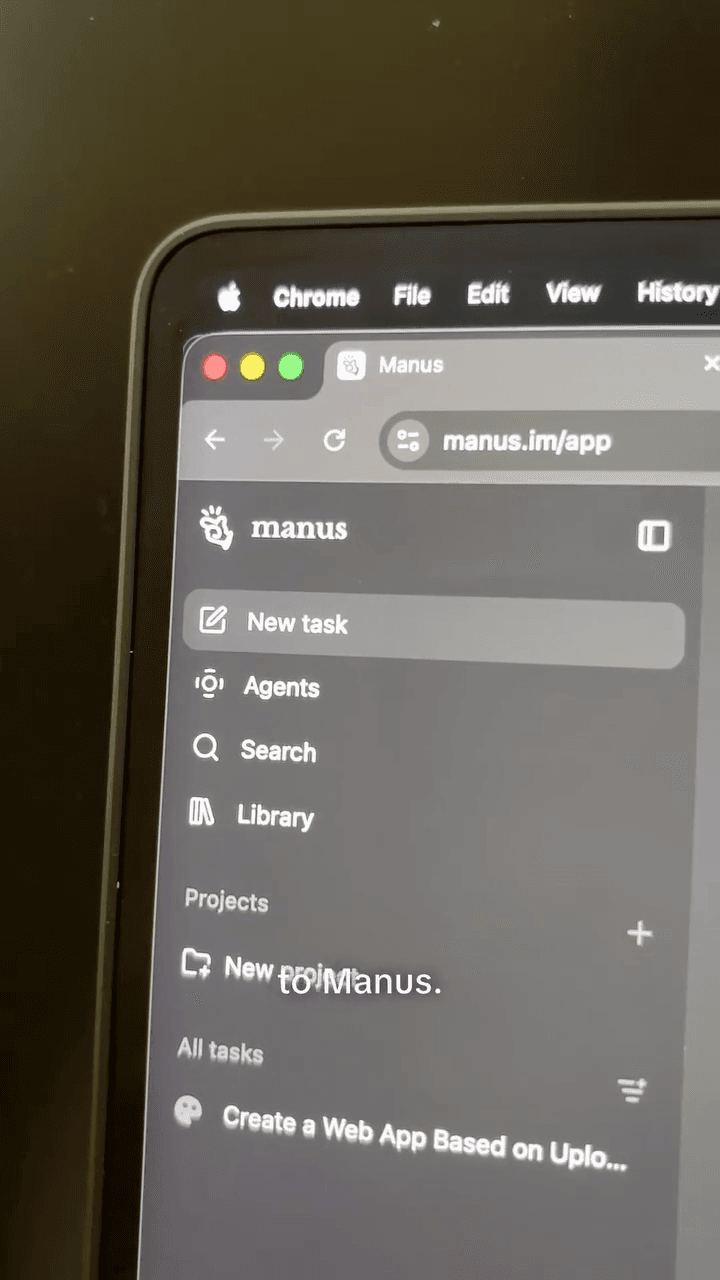
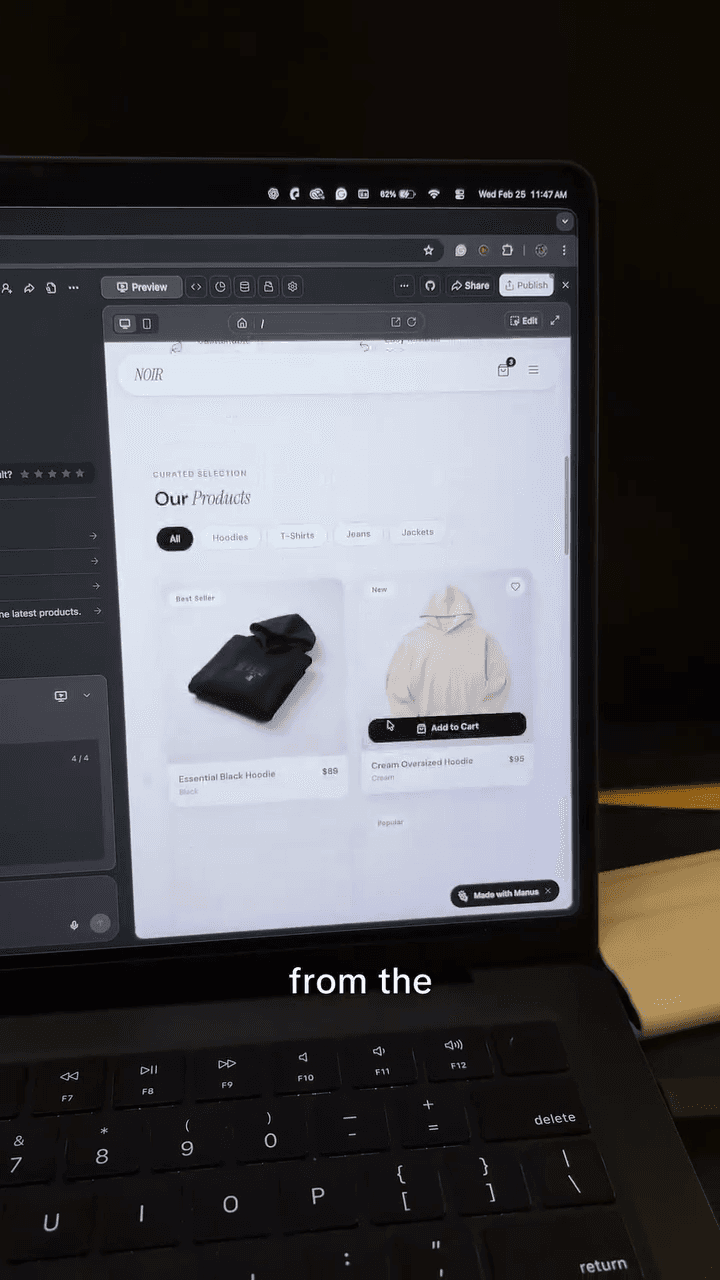
The program began with different users and the jobs they needed to get done. Instead of repeating that an AI agent is powerful, creative concepts connected Manus to coursework, debugging, research, launch preparation and everyday work.
Three complete creator examples show different ways to make an AI agent tangible. Select a format to watch the original work; the short descriptions explain what to look for.
View selected videoOriginal creator videos retain their source language, captions and tone. They include informal or meme-led expressions and third-party product demos. These are archived creative examples, not official endorsements of every statement or evidence of sales performance. Further source examples remain in the original proposal.
The original proposal maps these initial personas to practical jobs and demonstrable value. It does not rank them as proven winning segments.
Their taskCourse projects, debugging and technical research.
Value to demonstrateBuild a website, identify a problem, gather and organize information.
Their taskReports, research and repetitive work.
Value to demonstrateSearch, summarize and automate useful parts of the workflow.
Their taskCourse research, study plans and group assignments.
Value to demonstrateResearch a topic and break a larger task into manageable steps.
Their taskCompetitor research, MVP development and product launches.
Value to demonstrateConnect research to something that can be built and used.
Their taskMarket research, project planning and supplier comparisons.
Value to demonstrateOrganize multi-step information for a better-informed decision.
Three CS-student package examples from the proposal connect an opening situation, a product demonstration and a content format. They illustrate the test design—not a claim that every concept won.
Show a website being generated from the requirements.
POVShow the product locating and fixing a coding problem.
Screen recordingShow information being searched, compared and summarized.
Talking headThe program’s approach connects creative variation, publishing signals and the next round of work.
Pair user needs with a hook, demonstration and format that makes the product useful in context.
Compare views and engagement to identify promising user–task combinations and creative structures.
Adapt promising approaches across creators, languages and settings. Let strong creators develop their own narrative and performance patterns.
Connect a persona, a real task and a product demonstration. This planning structure gives the next creative brief a useful starting point—and helps the team explore more relevant ways to tell the story.
Explore the original proposal for the complete case material, video references and service context. These selected works illustrate creative approaches, not a controlled comparison of performance.
Build a pilot around the audience, the task and the product proof. Our UGC Program brings the creative planning and delivery together.